Sewing Machines
The Best Sewing Machines of 2026, by What You Sew
 By Maya ChenEditor-in-chief
Category winners for home sewists — matched to beginners, heavy fabrics, quilting and embroidery.
Our top picks at a glance
| Model | Pick | Type | Stitches | Max speed | Price band | Check price |
|---|---|---|---|---|---|---|
| Best overall | Computerized | 70 | Up to 750 spm | Mid-range | ||
| Best budget | Mechanical | 37 | — | Budget | ||
| Best heavy duty | Mechanical | 18 | — | Premium | ||
| Best value heavy duty | Mechanical | 32 (110 apps) | Up to 1,100 spm | Mid-range | ||
| Best for quilting (straight stitch) | Straight-stitch | 1 (straight) | Up to 1,500 spm | Premium | ||
| Best sewing + embroidery | Combo | 103 sew / 135 designs | — | Mid-range | ||
| Best for decorative stitches | Computerized | Computerized menu | — | Mid-range | ||
| Best feature-rich step up | Computerized | 165 | — | Mid-range |
How we chose
More detail for first-time buyers lives on best sewing machines for beginners. Browse every guide from the sewing machines page.
The best sewing machines by category
Best overall
Best overall
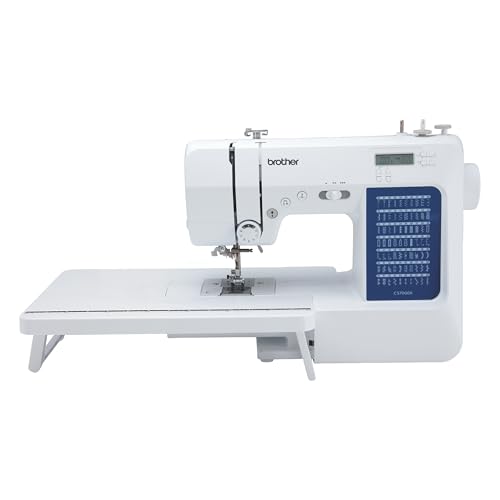
Brother CS7000X (opens Amazon in a new tab)
Best for: Beginners and new quilters who want a walking foot, wide table and speed control in one box
- Built-in stitches: 70Source
- Buttonholes: 7 one-step auto-sizeSource
- Included feet: 10, including walking foot and 1/4" piecing footSource
- Max speed: Up to 750 spm with speed controlSource
- Stitch size: 7 mm max width / 5 mm max lengthSource
- Warranty: 25-year limitedSource
Pros
- Automatic needle threader and drop-in bobbin
- Walking foot, 1/4" foot, quilt guide and wide table included
- Speed control plus drop feed for free-motion
- Hard cover and metal frame on Brother's spec sheet
Cons
- Owners sometimes report durability issues over time
- Some mention needle breaks or skipped stitches with heavier use
- Not the strongest choice for daily denim stacks
Skip it if: You sew heavy canvas or leather every day and need a true heavy-duty mechanical
What owners mention
Praise
- stitch variety
- beginner-friendly setup
- strong value for the feature set
Complaints
- durability concerns over time
- needle breaks or skipped stitches for some owners
The CS7000X is the default recommendation when someone wants one domestic machine for garments and light quilting. Brother lists seventy stitches, seven one-step buttonholes, ten feet (including walking and quarter-inch feet), a wide table, speed control and drop feed. Owners often praise the value and beginner-friendly helpers; some report durability niggles over time — which is why we say skip it for daily heavy canvas.
Best budget
Best budget
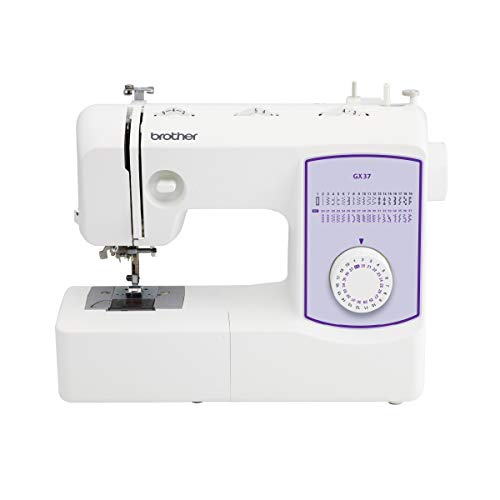
Brother GX37 (opens Amazon in a new tab)
Best for: Beginners who want a simpler budget machine with a short, useful stitch list
Pros
- Thirty-seven stitches keep choices manageable
- Six included feet cover basic garment tasks
- Lower complexity than feature-heavy computerized kits
Cons
- Fewer published advanced quilting accessories than CS7000X
- Not aimed at heavy canvas stacks
Skip it if: You already know you want a wide table and walking foot in the first box
What owners mention
Praise
- easy to learn
- good starter feature set
Complaints
- some outgrow it quickly
- limited for thick layers
When the budget band matters most, the GX37 keeps the feature list honest: thirty-seven stitches and six feet. It will not replace a quilting kit, and it should not. It is the clean “learn the basics” machine on this guide.
Best for beginners
Best for beginners
Best sewing machines for beginners
If you want the short list aimed at first machines — easy threading, speed control and useful stitches over inflated stitch counts — use the dedicated beginners guide instead of a single product box here.
Best heavy duty
Janome HD3000
Best heavy duty
Janome HD3000 (opens Amazon in a new tab)
Best for: Sewists who want a mechanical metal-frame machine for denim, canvas and thick quilt sandwiches
- Built-in stitches: 18Source
- Buttonhole: 1-stepSource
- Stitch size: 6.5 mm max width / 4 mm max lengthSource
- Needle threader: Built-inSource
- Presser-foot lift: Extra-highSource
- Case: Hard caseSource
Pros
- Mechanical simplicity with an extra-high presser-foot lift
- Snap-on feet and built-in needle threader
- Hard case included per published specs
Cons
- Premium band versus budget heavy-duty options
- Only 18 built-in stitches
Skip it if: You need embroidery or a huge decorative stitch menu
What owners mention
Praise
- solid mechanical feel
- handles thicker projects calmly
Complaints
- costs more than entry heavy-duty models
- few decorative stitches
The Janome HD3000 is a mechanical pick for thick work: eighteen stitches, a one-step buttonhole, extra-high presser-foot lift, snap-on feet and a hard case on published specs. It costs more than entry “heavy duty” marketing machines, which is the point — you are paying for a straightforward mechanical tool rather than a long stitch menu. Full short list: best heavy duty sewing machines.
Best value heavy duty
Best value heavy duty
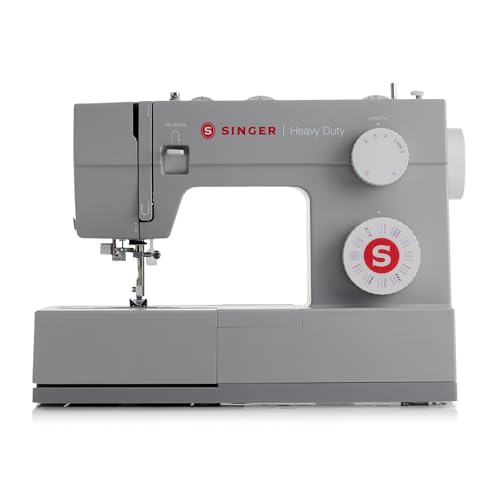
Singer Heavy Duty 4452 (opens Amazon in a new tab)
Best for: Beginners and home sewists who plan to sew denim, canvas and other thicker fabrics
- Built-in stitches: 32 stitches / 110 stitch applicationsSource
- Max speed: Up to 1,100 spmSource
- Needle threader: AutomaticSource
- Buttonhole: 1-stepSource
- Power claim: Singer claims 50% more power (Singer wording)Source
Pros
- High claimed speed for a home heavy-duty machine
- More stitch applications than the basic Heavy Duty sibling
- Automatic needle threader and one-step buttonhole
Cons
- Owners sometimes mention tension or timing issues after heavy use
- Some reviewers call out internal plastic parts despite the metal-frame marketing
Skip it if: You want a wide quilting table and walking foot as standard inclusions
What owners mention
Praise
- power for denim
- fast sewing when set up well
Complaints
- tension/timing after heavy use
- plastic parts inside despite heavy-duty branding
Singer’s 4452 brings the Heavy Duty series to sewists who want speed and thicker fabric capability without jumping to a premium mechanical. Singer lists up to 1,100 spm and claims fifty percent more power — attribute that wording to Singer. Owners like the muscle for denim; some mention tension or timing problems after hard use. Sibling comparison: Singer 4423 vs 4452.
Best for quilting
Juki TL-2010Q
Best for quilting
Juki TL-2010Q (opens Amazon in a new tab)
Best for: Quilters and sewists who want fast, precise straight seams through thick layers
- Stitch type: Straight stitch onlySource
- Speed: 200–1,500 spm speed sliderSource
- Max stitch length: 6 mmSource
- Extras: Thread trimmer, knee lifter, drop feedSource
- Table: 23" x 13" auxiliary tableSource
- Weight: 25.4 lb; aluminum die-castSource
Pros
- Very high speed range with a speed slider
- Automatic thread trimmer and knee lifter
- Large auxiliary table and even-feed foot included
Cons
- Straight stitch only — no zigzag or buttonhole
- Heavier and pricier than a general-purpose beginner machine
Skip it if: You need zigzags, buttonholes or decorative stitches on the same machine
What owners mention
Praise
- speed and straight-line accuracy
- handles thick stacks
Complaints
- one stitch type only
- size and weight for small spaces
The TL-2010Q is a straight-stitch specialist: speed slider from 200 to 1,500 spm, thread trimmer, knee lifter, drop feed and a large auxiliary table on Juki’s page. It will not sew a zigzag or buttonhole. If that trade-off matches how you quilt, it is the speed pick; if you need a multi-stitch quilting kit instead, start with the CS7000X or XR9550. Full quilting short list: best sewing machines for quilting.
Best sewing + embroidery combo
Best sewing + embroidery combo
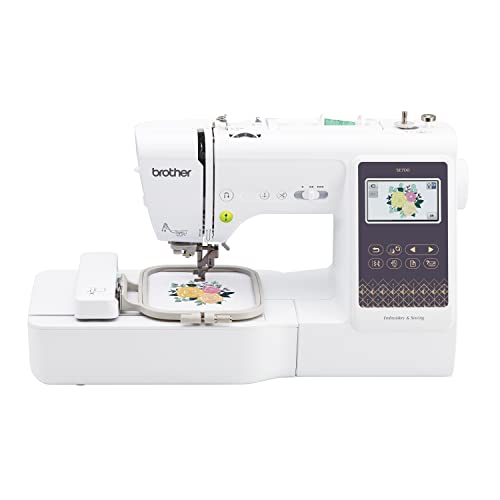
Brother SE700 (opens Amazon in a new tab)
Best for: Hobbyists who want everyday sewing plus small embroidery on one machine
- Embroidery area: 4" x 4"Source
- Built-in designs: 135Source
- Sewing stitches: 103Source
- Connectivity: Wireless LAN; Artspira appSource
Pros
- Sewing and embroidery in one footprint
- Wireless design transfer through Artspira
- Solid built-in design and stitch counts for home use
Cons
- 4" x 4" field limits jacket-back motifs
- App workflow has a learning curve for some owners
Skip it if: You need designs larger than 4" x 4" in a single hoop
What owners mention
Praise
- convenient combo
- wireless transfer
Complaints
- small embroidery field
- app setup takes patience
The SE700 combines computerized sewing (103 stitches) with a 4“ × 4“ embroidery field, 135 designs and wireless transfer through Artspira, according to Brother. It is the combo pick for monograms and small motifs. Step up only if you need a larger field. Deeper dive: Brother SE700 review. Beginner embroidery short list: best embroidery machines for beginners.
Best for decorative stitches
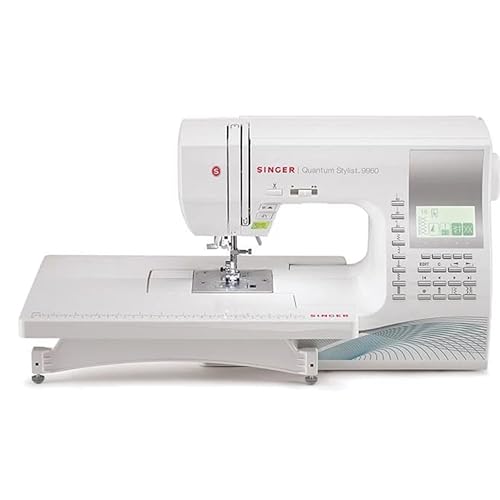
Best for decorative stitches
Singer Quantum Stylist 9960 (opens Amazon in a new tab)
Best for: Sewists who want decorative stitch options and an extension table for larger projects
Pros
- Computerized stitch selection
- Extension table included on the listing
- Strong fit for decorative work
Cons
- Stitch-application count should be confirmed on Singer.com before quoting
- Not a straight-stitch quilting specialist
Skip it if: You only need basic utility stitches
What owners mention
Praise
- decorative options
- table helps larger pieces
Complaints
- can feel feature-heavy for beginners
- not aimed at thick leather
The Quantum Stylist 9960 is here for sewists who want computerized decorative work and an extension table on the listing. Confirm stitch-application counts on Singer.com before you buy for a specific font or motif count — we are not inventing numbers the manufacturer page did not publish clearly.
Best feature-rich step up
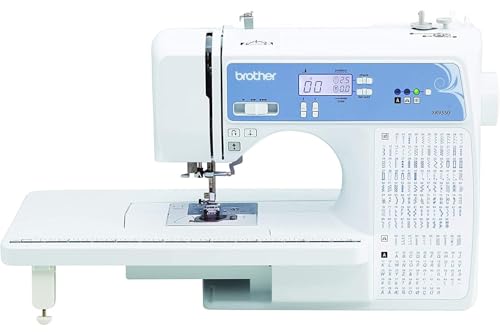
Best feature-rich step up
Brother XR9550 (opens Amazon in a new tab)
Best for: Sewists who want more decorative and alphanumeric stitches than a basic beginner kit
- Built-in stitches: 165 including 55 alphanumericSource
- Buttonholes: 8 one-stepSource
- Display: LCDSource
- Included feet: 8Source
- Extras: Wide table, hard cover, LEDSource
Pros
- Large built-in stitch library with alphanumeric options
- Wide table and hard cover included per Brother
- LCD selection for browsing stitches
Cons
- More choices can slow beginners down
- Still a domestic machine, not an industrial
Skip it if: You only need utility stitches and dislike large stitch menus
What owners mention
Praise
- decorative stitch variety
- table helps larger projects
Complaints
- learning curve for the menu
- some prefer fewer options
The XR9550 stretches past beginner kits with 165 stitches including alphanumeric options, eight one-step buttonholes, an LCD, wide table and hard cover on Brother’s page. Choose it when you have outgrown a short utility menu but still want a domestic all-rounder rather than a straight-stitch-only machine.
Which type of sewing machine do you need?
Mechanical
Dials, levers, fewer menus. Strong fit when you want predictable utility sewing and easier mental models. The GX37 and HD3000 sit on this side of the aisle for different budgets.
Computerized
Buttons or an LCD select stitches. Helpers like memorized patterns and richer decorative libraries show up here — CS7000X, XR9550, 9960 and the Singer HD computerized models.
Straight-stitch quilting machines
One excellent stitch, high speed, often a larger table and accessories like a knee lifter. The TL-2010Q is the example on this page. Keep a second machine if you still need zigzags.
Sewing and embroidery combos
One footprint for seams and hooped designs. The SE700 is the launch combo pick; larger fields cost more and add complexity.
Sergers
A serger finishes edges; it does not replace the lockstitch machines above. When you are ready for knits and clean seam finishes, read serger vs sewing machine and the serger beginners guide best sergers for beginners.
Brother vs Singer vs Janome vs Juki: how the brands differ
Brother tends to pack helpers and embroidery options into home machines. Singer’s Heavy Duty line owns a lot of denim-search intent at lower bands. Janome’s HD3000 is the mechanical premium pick here. Juki’s TL-2010Q is the straight-stitch speed tool. For a focused Brother-versus-Singer verdict, see Brother vs Singer. Also useful while you shop: Brother CS7000X review.
Features worth paying for (and ones that aren’t)
Worth it when you will use them weekly: automatic needle threader, speed control, a walking foot or even-feed foot for layers, extra-high presser-foot lift for thick stacks, a wide or auxiliary table, and a documented warranty.
Easy to overpay for: enormous decorative stitch counts, lights and fonts you never select, and “heavy duty” labels without a metal frame, strong feed or presser-foot clearance behind them.
Match the machine to the fabric and the seam you sew most often. That rule beats any brand loyalty pitch.
Sources and last checked8 sources
- Brother CS7000X product page · checked
- Brother GX37 product page · checked
- Brother XR9550 product page · checked
- Brother SE700 product page · checked
- Singer Heavy Duty 4452 product page · checked
- Juki TL-2010Q product page · checked
- Janome site · checked
- Singer site · checked
FAQ
What is the best sewing machine brand?
There is no single winner. Brother often leads for feature-rich beginner and embroidery combos. Singer’s Heavy Duty line is the usual budget pick for denim. Janome and Juki show up when you want a tougher mechanical or a straight-stitch quilting machine. Choose by project, then brand.
What sewing machine do professionals use at home?
Many professionals keep a straight-stitch workhorse such as a Juki TL-series machine for fast seams, plus a general-purpose computerized machine for utility work. At home, that might mean a TL-2010Q beside a CS7000X or SE700 rather than one machine that pretends to do every job equally well.
Is a more expensive sewing machine worth it?
Only when the extra money buys a feature you will use weekly — throat space, a stronger feed, a larger embroidery field or a mechanical frame for thick layers. A premium band machine with stitches you never select is a worse buy than a mid-range kit that matches your projects.
How long does a sewing machine last?
With regular cleaning, the right needles and sensible fabric choices, a home machine can last many years. Owner complaints about timing or skipped stitches often trace to dull needles, lint in the bobbin area or sewing too-thick stacks without the right foot — not only to age.
Should I buy a sewing machine on Amazon or from a dealer?
Dealers often include classes, in-person setup help and local service — valuable if you want support nearby. Amazon usually offers wider model choice and easier returns when a machine is simply the wrong fit. Neither channel changes the specs; it changes the support wrapped around them.
About the SewPicks editors
SewPicks is written by named editors who compare sewing, quilting and embroidery machines from manufacturer specs and patterns in owner reviews. We do not run physical product trials. Our picks change when models are discontinued or better options appear.
 James WhitfieldReviews editor
- Maya ChenEditor-in-chief
 Rachel TorresQuilting & embroidery editor
Meet the full team on Authors & Editors, or read How We Choose.